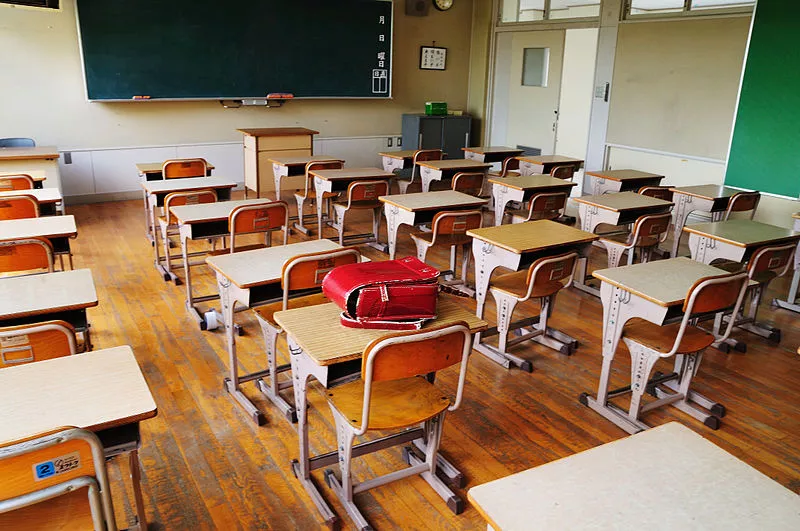
In this week's class, we talked about how people were treated unequally in the school system. As stated in the introduction of part three in the book "School: The Story of American Public Education" by David Tyack, James D. Anderson, Larry Cuban, Carl F. Kaestle, Diane Ravitch, Sheila Curran Bernard, Sarah Mondale, and Meryl Streep, it sates that "As we advance in the modern crusade for equal educational opportunity, we realize that its form and content in 1950 varied considerably from that of the present. America in 1950 was a fundamentally different nation, one that is increasingly difficult to comprehend and appreciate from our contemporary angle of vision. In 1950, though it was often dangerous- and in seventeen states illegal- for ethnic minorities to attend so-called white public schools, the promise of American public education held a special place in the hearts and minds of citizens across the nation. From the viewpoints of various minority communities, public schooling affected their children's chances for active participation in American life and served as the main community issue around which different people could rally to promote achievement, equality, and the promise of the American dream. As the experience of the past five decades has brought with it consequences not imagined in 1950, goals and struggles that once seemed noble are now faded dreams and points of cotention. Discussions of school integration, for example, have been removed from the national agenda and find expression only in lawsuits and isolated corners academics. Since the formative stages of the civil rights movement, the role of public education in a democracy has been constantly redefined. Hence, a dialogue between the past and the present on the critical issues raised by
Brown v. Board of Education and the resulting campaigns for equal educational opportunity seems much needed at this moment in the nation's history."(Tyack et al, pgs. 123-124). What this means is that equal education has changed a whole lot from then to now (the present). This is because now, for the most part, everyone gets an equal education regardless of who you are and where you come from.
I believe Americanization and cultural diversity plays a big role for the purpose of bilingual education. This is because there are people who go to school from all over the world and speak different languages which is why I believe bilingual education is very important in the school system. For example, we have many students who speak different languages such as Arabic, Spanish, Italian, etc. and we need bilingual education in order to help us better understand what they are saying and for purposes of communicating with them in their language. It is extremely important that we have bilingual education. It is the most important.
Furthermore, the prices and roles that communities pay and play in securing educational equality is that they always look out for their children (e.g. is everything okay with him or her in school?, is he or she getting a proper education?, is he or she getting treated equally as others?). Parents are always on top of their child's education. For example, my parents always stay on top of what I am doing in school and make sure that I am actually getting good grades and I am doing well in school. This is because it is important to know what your child is doing in school and how they are doing in school. My parents are actively involved with what I do. My parents are on top of it.
To add on, I remember when I was in kindergarten, my teacher used to treat me like trash. I remember one day it was recess and I was out playing in the schoolyard with my friends and fell. I got heart and my knee was bleeding. I asked the teacher, Ms. Martin if I could go to the school nurse and the response that I got from her was "No, you don't need to, you'll live", and that really upset me. I went home and told my parents about what Ms. Martin had said and they went and told the school Principal, Mr. Costello. Mr. Costello than went and talked to Ms. Martin about it and completely denied that she had said that even when she did know deep down that she did say that. I eventually had my classroom switched to a different teacher. Also, in the article "Revolutions Happen through Young People!": The Black Student Movement in the Boston Public Schools, 1968-1971 by Tess Bundy, it also discusses how a sixteen-year-old African American student who was treated unequally in school by his fellow classmates and teachers (Bundy, 2017, pgs. 273-289).
In conclusion, we talked about how kids were treated unequally in schools. We discussed what could be done to prevent unequal treatment. We also discussed why they were unequally treated. Also, we each gave our own opinions on this topic. Everyone gave their viewpoints.
https://www.google.com/search?q=separate+and+unequal&source=lnms&tbm=isch&sa=X&ved=0ahUKEwi_u6voy9bdAhVkiOAKHah2A3sQ_AUIECgD&biw=1366&bih=657#imgrc=QTfd9CT7U1jqYM:
SEPERATE AND UNEQUAL: Tumblr
References
1. Mondale, S., Streep, M., Tyack, D., Anderson, J.D., Cuban, L., Kaestle, C.F., Ravitch, D., Bernard, S.C., (2001). School: The Story of American Public Education. Boston, MA: Beacon Press.
2. Bundy, Tess (2017). "Revolutions Happen through Young People!": The Black Student Movement in the Boston Public Schools, 1968-1971. Journal of Urban History, 43(2), 273-293. doi: 10.1177/0096144216688277
3.https://www.google.com/search?q=separate+and+unequal&source=lnms&tbm=isch&sa=X&ved=0ahUKEwi_u6voy9bdAhVkiOAKHah2A3sQ_AUIECgD&biw=1366&bih=657#imgrc=QTfd9CT7U1jqYM:
SEPERATE AND UNEQUAL: Tumblr


:max_bytes(150000):strip_icc()/Privateschool-58b5b2173df78cdcd8a980c7.jpg)