I argue and disagree with the fact that "Many political and educational reformers, even while condemning businessmen as robber barons, admired their insistence on scientific efficiency and professional management." (Tyack et al, pgs. 175-176). This is because mostly politicians don't contribute to schooling. It is mostly people from the community that contribute to schooling. Also, I disagree with the fact that "Top corporate leaders and Business Roundtables claimed that these strategies had worked for Ford Motor Company, IBM, Xerox, Hewlett-Packard, and scores of other firms. If schools pursued these changes, they could revolutionize public schooling."(Tyack et al, pg. 178). This is not possible because like I stated before, these big businessmen don't get involved with schooling. It's the people at the other end, for example, the superintendents, mayors, governors, and school principals who get involved with the school system.
I assume that "The few studies that have been done about teaching and learning in actual classrooms before the 1980's and since confirm that dominant patterns of teacher-centered instruction in both elementary and secondary schools have remained stable."(Tyack et al, pg. 179). I assume this because I believe it has remained stable since then. I also assume that "If anything, the impact of standards-based performance and accountability for test score improvement has hardened these traditional teaching practices."(Tyack et al, pgs. 179-180). I also assume this because I believe testing has definitely impacted the way teachers teach. It has made a huge difference.
Lastly, I aspire to participate in changing our school system. This entire book talks about school and the school system. I also aspire to be sometime after I retire from being a cop (which I will be one day, hopefully) is to be a part of our school system and maybe go on to teach in the field of Criminal Justice. Since this book and course is all about school, my idea of teaching Criminal Justice relates to the topic of discussion. It ties in with the topic.
In conclusion, this is what school was like 1980 to the present. There were some things that I agreed and disagreed with and I mentioned those above. This was a great read. In this book, I really got to know how schooling changed overtime. Also, I learned what steps had to be taken to have the type of schooling that we have today.
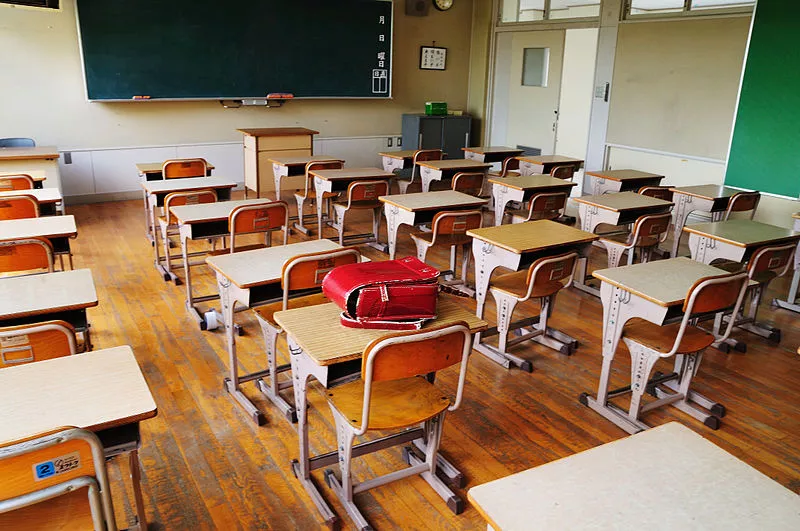
https://www.google.com/search?q=schools&source=lnms&tbm=isch&sa=X&ved=0ahUKEwjPuq_G59bdAhWPUt8KHUNnCNgQ_AUIECgD&biw=1366&bih=657#imgrc=bSGjUkxdgNsD9M:
Florida education board approves schools for 'hope' money
References
1. Mondale, S., Streep, M., Tyack, D., Anderson, J.D., Cuban, L., Kaestle, C.F., Ravitch, D., Bernard, S.C. (2001). School: The Story of American Public Education. Boston, MA: Beacon Press.
2. https://www.google.com/search?q=schools&source=lnms&tbm=isch&sa=X&ved=0ahUKEwjPuq_G59bdAhWPUt8KHUNnCNgQ_AUIECgD&biw=1366&bih=657#imgrc=bSGjUkxdgNsD9M:
Florida education board approves schools for 'hope' money

No comments:
Post a Comment