Tuesday, September 25, 2018

Ehtisham Tariq - Part Four - 1980-2000 - The Bottom Line

     In this week's class, we discussed schooling from the 1980's all the way up to the present. As stated in part four of the book "School: The Story of American Public Education" by David Tyack, James D. Anderson, Larry Cuban, Carl F. Kaestle, Diane Ravitch, Sheila Curran Bernard, Sarah Mondale, and Meryl Streep, it states that "At two separate points in our history, the ends of the nineteenth and twentieth centuries, American schools have been vocationalized. Among the civic, academic, and moral goals that have historically guided tax-supported public schools, one became primary: preparing students for the ever-changing workplace. Twice in the past, business-led coalitions forged political alliances among public officials, union leaders, educators, and parents. Fearing foreign competition for their share of the global market, they turned to schools to develop an efficient workforce that would give American international trade an edge and ultimately fuel prosperity. In both cases, these reformers believed that schools should be modeled after the corporation and the marketplace. In these two periods of reform, business involvement in U.S. public schools was sustained and influential in changing school goals, governance, management, organization, and curriculum. But, surprisingly, business support has done little to alter dominant classroom practices." (Tyack et al, pg. 174). I agree with this because students were brought to school to be taught different skills they could use at work or to get work.  Also, "Business interest in schools has largely involved private individuals and groups drawn from a variety of large, middle-sized, and small businesses. No monolithic business community, "Big Business," has shaped and steered U.S. public schools.""(Tyack et al, pg. 174). I also agree with this because no big businesses have contributed to the U.S. school system.
     I argue and disagree with the fact that "Many political and educational reformers, even while condemning businessmen as robber barons, admired their insistence on scientific efficiency and professional management." (Tyack et al, pgs. 175-176).  This is because mostly politicians don't contribute to schooling. It is mostly people from the community that contribute to schooling. Also, I disagree with the fact that "Top corporate leaders and Business Roundtables claimed that these strategies had worked for Ford Motor Company, IBM, Xerox, Hewlett-Packard, and scores of other firms. If schools pursued these changes, they could revolutionize public schooling."(Tyack et al, pg. 178).  This is not possible because like I stated before, these big businessmen don't get involved with schooling. It's the people at the other end, for example, the superintendents, mayors, governors, and school principals who get involved with the school system. 
     I assume that "The few studies that have been done about teaching and learning in actual classrooms before the 1980's and since confirm that dominant patterns of teacher-centered instruction in both elementary and secondary schools have remained stable."(Tyack et al, pg. 179). I assume this because I believe it has remained stable since then. I also assume that "If anything, the impact of standards-based performance and accountability for test score improvement has hardened these traditional teaching practices."(Tyack et al, pgs. 179-180). I also assume this because I believe testing has definitely impacted the way teachers teach. It has made a huge difference. 
     Lastly, I aspire to participate in changing our school system. This entire book talks about school and the school system. I also aspire to be sometime after I retire from being a cop (which I will be one day, hopefully) is to be a part of our school system and maybe go on to teach in the field of Criminal Justice. Since this book and course is all about school, my idea of teaching Criminal Justice relates to the topic of discussion. It ties in with the topic. 
     In conclusion, this is what school was like 1980 to the present. There were some things that I agreed and disagreed with and I mentioned those above. This was a great read. In this book, I really got to know how schooling changed overtime. Also, I learned what steps had to be taken to have the type of schooling that we have today.
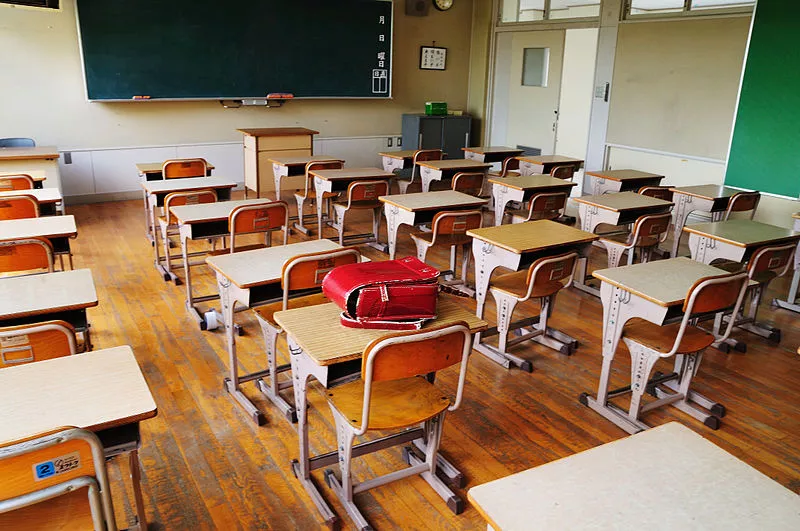
Image result for schools
https://www.google.com/search?q=schools&source=lnms&tbm=isch&sa=X&ved=0ahUKEwjPuq_G59bdAhWPUt8KHUNnCNgQ_AUIECgD&biw=1366&bih=657#imgrc=bSGjUkxdgNsD9M:
Florida education board approves schools for 'hope' money
                                                                References
1. Mondale, S., Streep, M., Tyack, D., Anderson, J.D., Cuban, L., Kaestle, C.F., Ravitch, D., Bernard, S.C. (2001). School: The Story of American Public Education. Boston, MA: Beacon Press.
2. https://www.google.com/search?q=schools&source=lnms&tbm=isch&sa=X&ved=0ahUKEwjPuq_G59bdAhWPUt8KHUNnCNgQ_AUIECgD&biw=1366&bih=657#imgrc=bSGjUkxdgNsD9M:
Florida education board approves schools for 'hope' money

Ehtisham Tariq - Part Three - Separate and Unequal

     In this week's class, we talked about how people were treated unequally in the school system. As stated in the introduction of part three in the book "School: The Story of American Public Education" by David Tyack, James D. Anderson, Larry Cuban, Carl F. Kaestle, Diane Ravitch, Sheila Curran Bernard, Sarah Mondale, and Meryl Streep, it sates that "As we advance in the modern crusade for equal educational opportunity, we realize that its form and content in 1950 varied considerably from that of the present. America in 1950 was a fundamentally different nation, one that is increasingly difficult to comprehend and appreciate from our contemporary angle of vision. In 1950, though it was often dangerous- and in seventeen states illegal- for ethnic minorities to attend so-called white public schools, the promise of American public education held a special place in the hearts and minds of citizens across the nation. From the viewpoints of various minority communities, public schooling affected their children's chances for active participation in American life and served as the main community issue around which different people could rally to promote achievement, equality, and the promise of the American dream. As the experience of the past five decades has brought with it consequences not imagined in 1950, goals and struggles that once seemed noble are now faded dreams and points of cotention. Discussions of school integration, for example, have been removed from the national agenda and find expression only in lawsuits and isolated corners academics. Since the formative stages of the civil rights movement, the role of public education in a democracy has been constantly redefined. Hence, a dialogue between the past and the present on the critical issues raised by Brown v. Board of Education and the resulting campaigns for equal educational opportunity seems much needed at this moment in the nation's history."(Tyack et al, pgs. 123-124). What this means is that equal education has changed a whole lot from then to now (the present). This is because now, for the most part, everyone gets an equal education regardless of who you are and where you come from.
     I believe Americanization and cultural diversity plays a big role for the purpose of bilingual education. This is because there are people who go to school from all over the world and speak different languages which is why I believe bilingual education is very important in the school system. For example, we have many students who speak different languages such as Arabic, Spanish, Italian, etc. and we need bilingual education in order to help us better understand what they are saying and for purposes of communicating with them in their language. It is extremely important that we have bilingual education. It is the most important. 
     Furthermore, the prices and roles that communities pay and play in securing educational equality is that they always look out for their children (e.g. is everything okay with him or her in school?, is he or she getting a proper education?, is he or she getting treated equally as others?). Parents are always on top of their child's education. For example, my parents always stay on top of what I am doing in school and make sure that I am actually getting good grades and I am doing well in school. This is because it is important to know what your child is doing in school and how they are doing in school. My parents are actively involved with what I do. My parents are on top of it. 
     To add on, I remember when I was in kindergarten, my teacher used to treat me like trash. I remember one day it was recess and I was out playing in the schoolyard with my friends and fell. I got heart and my knee was bleeding. I asked the teacher, Ms. Martin if I could go to the school nurse and the response that I got from her was "No, you don't need to, you'll live", and that really upset me. I went home and told my parents about what Ms. Martin had said and they went and told the school Principal, Mr. Costello. Mr. Costello than went and talked to Ms. Martin about it and completely denied that she had said that even when she did know deep down that she did say that. I eventually had my classroom switched to a different teacher. Also, in the article "Revolutions Happen through Young People!": The Black Student Movement in the Boston Public Schools, 1968-1971 by Tess Bundy, it also discusses how a sixteen-year-old African American student who was treated unequally in school by his fellow classmates and teachers (Bundy, 2017, pgs. 273-289). 
     In conclusion, we talked about how kids were treated unequally in schools. We discussed what could be done to prevent unequal treatment. We also discussed why they were unequally treated. Also, we each gave our own opinions on this topic. Everyone gave their viewpoints. 

Image result for separate and unequal
https://www.google.com/search?q=separate+and+unequal&source=lnms&tbm=isch&sa=X&ved=0ahUKEwi_u6voy9bdAhVkiOAKHah2A3sQ_AUIECgD&biw=1366&bih=657#imgrc=QTfd9CT7U1jqYM:
SEPERATE AND UNEQUAL: Tumblr
                                                                           References
1. Mondale, S., Streep, M., Tyack, D., Anderson, J.D., Cuban, L., Kaestle, C.F., Ravitch, D., Bernard, S.C., (2001). School: The Story of American Public Education. Boston, MA: Beacon Press.
2. Bundy, Tess (2017). "Revolutions Happen through Young People!": The Black Student Movement in the Boston Public Schools, 1968-1971. Journal of Urban History, 43(2), 273-293. doi: 10.1177/0096144216688277
3.https://www.google.com/search?q=separate+and+unequal&source=lnms&tbm=isch&sa=X&ved=0ahUKEwi_u6voy9bdAhVkiOAKHah2A3sQ_AUIECgD&biw=1366&bih=657#imgrc=QTfd9CT7U1jqYM:
SEPERATE AND UNEQUAL: Tumblr

Tuesday, September 18, 2018

Ehtisham Tariq - Part Two 1900-1950- As American As Public School

     In this week's class, we talked about how school was used as a way to get into the workforce. As stated in the introduction of part two in the book "School: The Story of American Public Education" by David Tyack, James D. Anderson, Larry Cuban, Carl F. Kaestle, Diane Ravitch, Sheila Curran Bernard, Sarah Mondale, and Meryl Streep, it states that "The first half of the twentieth century was a time of remarkable expansion for the American public school. Schools were called upon to teach the skills and knowledge needed for participation in a democratic industrial society to a rapidly growing and diverse population."(Tyack et al, pg. 63). What this means is that schools were used as a way to get jobs by teaching the students the different skills needed to function properly in an every-day lifestyle. Children at that time went to school to get jobs and support their families. 
     Also, "As the economy became more complex, students stayed in school longer to gain additional skills and knowledge. More and more districts established secondary schools, and high school enrollments increased dramatically in the early decades of the twentieth century. Education experts debated whether these new students should be expected to take the standard academic curriculum. The urgency of their debate heightened as high school enrollments soared, doubling every decade from 1890 to 1930. The extension of educational opportunity to so many youngsters was a triumph for the principle of universal education. An ever larger proportion of the population had the opportunity to attend secondary schools (though many African American youngsters lived in communities in the South where no high schools were available for them until mid-century)."(Tyack et al, pg. 64). As you can see, students were in school to gain knowledge aside from the academic knowledge they were gaining.
     Furthermore, in class we learned that students were taught how to work with their hands. Also we learned that how people from all over the world immigrated to the United States of America. In the article, Civic Education and Changing Definitions of American Identity, 1900-1950 by Jeffrey Mirel, it is stated that "Between 1900 and 1930, over 18.6 million people immigrated to the US, the largest percentage coming from eastern and southern Europe. This enormous migration, perhaps the largest mass movement in human history, included three million Slavs (mostly Poles), three million Italians and two million Jews. The largest non-European group was Mexicans, who numbered about one million. Educational leaders in major cities reported that some schools served children representing over 25 nationalities and language groups (Dinnerstein et al., 1990; Tyack, 1974; Lind, 1995)."(Mirel, 2002, pg. 144). 
     Lastly, I would like to say that we also learned and talked about how schools used the SAT's and the I.Q. to determine the capability of a student. They gave the student different assessments to see where the student is at academically. It were these different tests that determined where the student was at. We also discussed in class how these tests became extremely important to take for students. This is because this is what determined their academic capability.
     In conclusion, we talked about all of the ways students were assessed. We also talked about how students went to school mostly because they wanted to find a job to support their families. We also talked about why education was important. This is because it was very hard to find a job if you didn't have an education and that is still the case today. It is very important to be well-educated if you want to find a good job and have an easier lifestyle. 
Image result for School
https://www.google.com/search?q=School&source=lnms&tbm=isch&sa=X&ved=0ahUKEwjZgI6ggsXdAhUBmuAKHXhiAGEQ_AUIDygC&biw=1366&bih=662#imgrc=BKmWS6Em-YvLTM:
Playlist: The perfect back-to-school talks, from a TED intern

                                                                     References
1. Mondale, S., Streep, M., Tyack, D., Anderson, J.D., Cuban, L., Kaestle, C.F., Ravitch, D., Bernard, S.C., (2001). School: The Story of American Public Education. Boston, MA: Beacon Press.
2. Mirel, Jeffrey (2002). Civic Education and Changing Definitions of American Identity, 1900-1950. Educational Review, 54(2), 143-152. doi: 10.1080/00131910220133239
3. https://www.google.com/search?q=School&source=lnms&tbm=isch&sa=X&ved=0ahUKEwjZgI6ggsXdAhUBmuAKHXhiAGEQ_AUIDygC&biw=1366&bih=662#imgrc=BKmWS6Em-YvLTM:
Playlist: The perfect back-to-school talks, from a TED intern

Wednesday, September 12, 2018

Ehtisham Tariq - Part 1 - the formation of schools and Common Schools(p. 1-60)

     In this week's class, we talked about schools and the Common Schools. As stated in the introduction of "School: The Story of American Public Education" by David Tyack, James D. Anderson, Larry Cuban, Carl F. Kaestle, Diane Ravitch, Sheila Curran Bernard, Sarah Mondale, and Meryl Streep, it states that "Schools are the most familiar of all civic institutions. You find them in city slums and leafy suburbs, Appalachian valleys and mining towns high in the Rockies." (Tyack et al, pg.1). What this means is that you see and find schools everywhere. Schools are everywhere you go. 
     Also, we talked about how education has changed overtime and how people view education to be. For example, nowadays everyone has a mindset that "you must have a bachelor's degree" to get somewhere in life. But that is not true. You can work a lot of jobs such as being an electrician with just a high school degree. You do not have to go to college to get a good job.
     Also, "The Common School", was created in the period between 1770-1900.(Tyack et al, pg. 9). "Common schools were funded by local property taxes, charged no tuition, were open to all white children, were governed by local school committees, and were subject to a modest amount of state regulation. They arose through two decades of debate prior to the Civil War in the Northeast and the Midwest of what is now the United States and, later in the nineteenth century, in the South and the West."(Tyack et al, pg. 11). Also, I agree with what is said in the book that "Perhaps one reason many Americans feel that we have lost our way in education is that we have forgotten where we have been."(Tyack et al, pg. 3). I really feel we do not look at education the way we used to.
     Furthermore, we also talked about how some professions are only looked at as professions for only one gender because you mostly see only one gender working that job. For example, mostly in hospitals you see only women as nurses. You do not see men as nurses most of the time. Another example would be cops. You do not see a lot of female cops. We basically talked about how education and schooling changed over time. 
     In addition, we talked about how the schooling system changed over time as well. We basically talked about the schooling system and how it changed over time. We also talked about what we feel needs to be changed with the schooling system while we were in small groups discussing our sentences/phrases/words. We talked about how we can change the schooling system. We heard opinions from fellow classmates. We talked about education is very different now from back then. Everything has changed a lot over time. 
     Lastly, I would like to say that we talked about schooling in America and even outside of America. A fellow classmate talked about schooling in Jamaica since she is from Jamaica and visits often. Her grandmother is a teacher in Jamaica and knows a lot about the school system in Jamaica.We got to learn of the schooling in America and what changed from then to now. We talked about how we can improve our schooling and what steps can we take to improve it. A lot has changed from then to now and we must know about this. This is because if we do not learn about this, we will not know how schooling changed over time. 
     In conclusion, we learned about the different types of schooling. We got to interact with each other. That was really fun. Plus, we got to learn about fellow classmates' opinions/experiences about schooling outside of America. We had a great time. 


Image result for School
https://www.google.com/search?q=School&source=lnms&tbm=isch&sa=X&ved=0ahUKEwi959HSl7bdAhWkTt8KHYkcCRIQ_AUICygC&biw=1366&bih=662#imgrc=LNXZkuLOI6E1KM:
Meramec Valley RIII Schools - BSIP

                                                                               References
1. Mondale, S., Streep, M., Tyack, D., Anderson, J.D., Cuban, L., Kaestle, C.F., Ravitch, D., Bernard, S.C. (2001). School: The story of American public education. Boston, MA: Beacon Press.
2. https://www.google.com/search?q=School&source=lnms&tbm=isch&sa=X&ved=0ahUKEwi959HSl7bdAhWkTt8KHYkcCRIQ_AUICygC&biw=1366&bih=662#imgrc=LNXZkuLOI6E1KM:
Meramec Valley RIII Schools - BSIP

Tuesday, September 4, 2018

Ehtisham Tariq Literacy Autobiography Blog # 1

     I remember my earliest childhood days. I remember the first day I went to school and was crying on the way to school. Being literate is very important in our home and our family. This is because being literate shows that you are a well-educated human being and that you are well-mannered. It also shows that you were well-raised. 
     Furthermore, I do recall a time in my childhood when I was not literate. I was in first grade and had difficulty spelling words. I could not spell words correctly. For example, I would spell the word "Cat" with a "K" instead of a "C." It would be those little mistakes that would make me feel   illiterate.
     To add on, I believe my teachers played a huge role in helping me with my difficulty of writing words with incorrect spelling. My teachers were always there to help me. I also believe my teachers were my biggest inspiration because when I used to see them write and communicate well, that would encourage me to write and communicate well also. My parents were also a big support to me as well because they would take time out of their time and sit down with me and help me to learn how to spell words correctly. My parents also arranged for someone to come and help me with my spelling. My parents, even today, still support me and help me if I need it in any of my schoolwork and even beyond that. They are a big help to me. 
     Furthermore, my teachers and parents always encouraged me to try my best, which did encourage me to do good and always try my best. My parents also helped and encouraged me by having me participate in the elementary school level spelling bees. That way, even if I did spell something wrong, I would know right away and learn how to spell the word correctly. My earliest experiences with literacy were in first grade. I couldn't spell words correctly and I believe that experience significantly impacted my development because now I can spell most words without any problem.  Also, outside of school I would be getting private spelling lessons from someone and I also watched educational shows in which you would watch cartoons and also learn how to spell words.
     In addition, I really began to feel literate when I began High School. This is because before that, I really didn't have sense of most of the words that I learned to spell. I knew how to spell them but didn't know what they mean. For example, I knew how to spell the word "literate" but didn't know what it meant. As time progressed, I learned the meaning of the words, which made me feel literate.
     To add on, I loved watching educational TV Shows such as "Caillou" which helped me learn new things.The TV show "Caillou" really helped me gain a lot of educational knowledge. I also loved to read books with pictures which helped me get a better understanding of what's happening in the story. I am a visual learner and like to see what I learn. It helps me understand the topic better.
     On the other hand, what frustrated me the most was when I learned a certain word and couldn't spell it right. That used to really annoy me. This is because I wanted to get everything right the first time. As time went on, I learned that it's alright if you don't get something right the first time around. That is how everyone learns. You learn from your mistakes.
     To add on, I believe my biggest role model were my teachers. I wanted to be just like them and be well-educated and well-mannered. This is because being well-educated and well-mannered defines who you are. The way you talk and act shows the world how educated you are. It shows them who you are. 
     I believe literacy is very important in one's life. You need it to function in everyday life. When you travel or sign documents, you need to be literate. This is because you need to be able to understand what you're signing. Also, when you travel you need to understand the signboards and be able to follow them in order to get to your destination. 
     Furthermore, I continue to use literacy in my personal life by always trying to gain knowledge. I always read and I learn something new everyday. Reading is extremely important if you want to learn. Also, I interact with people because I also do learn a lot from people and their experiences. It is very important to be literate.
     Lastly, I believe that my professors and the people around me continue to sponsor and inspire my literacy development. This is because I learn from my professors. My professors are all very well-educated and I also want to be well-educated just like them. My professors are the ones who inspire me. I want to be just like them.
     In conclusion, I believe being literate is very important. It defines who you are. You need to be well-educated in order to move with society. You have to be able to make sense out of what you say and read. It is important that you are literate and what you are saying makes sense.